


Reimagining Peru
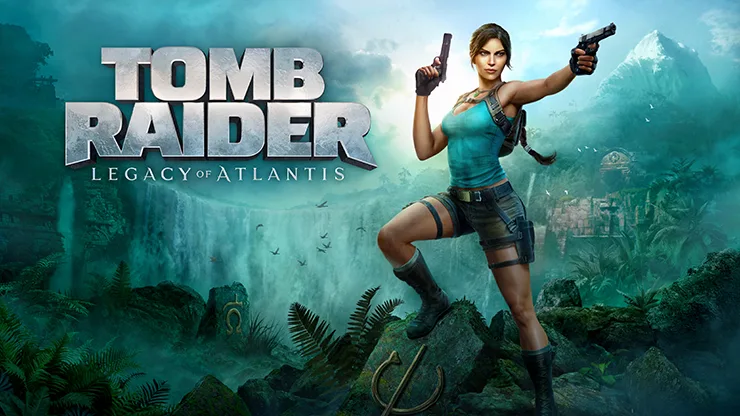
In 1996, Peru was where it all began. It was Lara Croft’s first adventure, the player’s first steps into the unknown, and the moment that defined a franchise. In Tomb Raider: Legacy of Atlantis, the teams at Crystal Dynamics and Flying Wild Hog set out to reimagine that iconic location from the ground up, honoring the feeling of the original while delivering something that could only exist today.
A Place, Not a Level
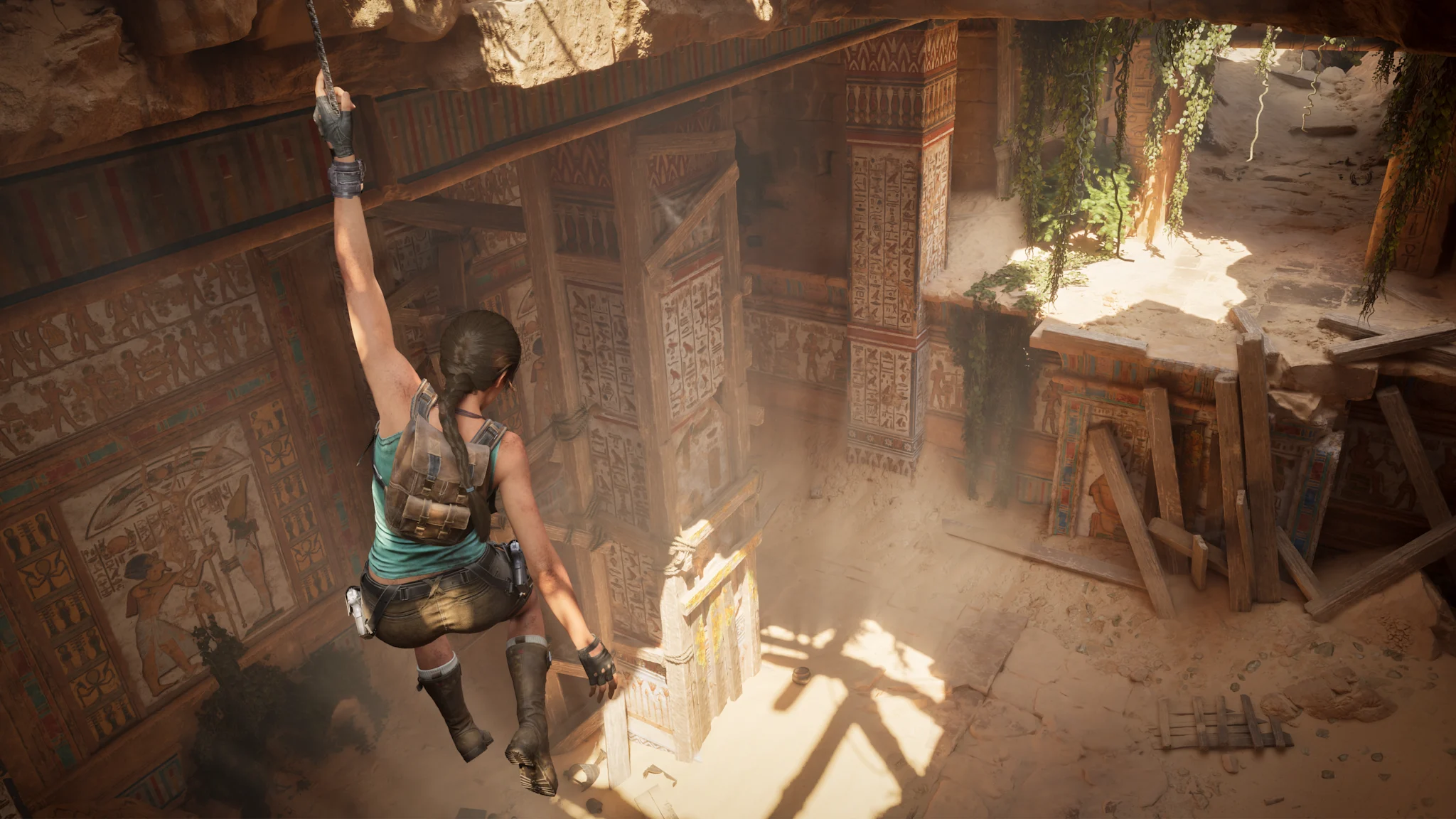
“One of the things we really wanted players to walk away with is the feeling that they stepped into a believable place, not just a game level,” says Jeff Adams, Experience Director at Crystal Dynamics. “The team has spent a ton of time refining the level and how you navigate it to deliver an authentic tour through the remnants of a lost civilization.”
For Raul Siqueira, Game Director at Crystal Dynamics, the design north star was clear: “A constant sense of awe and wonder as players go deep into the mountains and explore the jungles of the Lost Valley.”
That sense of scale starts with a fundamental shift in how the space is built. The original Peru was constructed room by room. This Peru is built from interconnected spaces. “Being able to create bigger, interconnected spaces allows us to really drive that sense of scale and wonder,” Siqueira says, “and make a Peru level that couldn’t be done back in the day, but honors the feeling that the original had.”
From Snow to Jungle
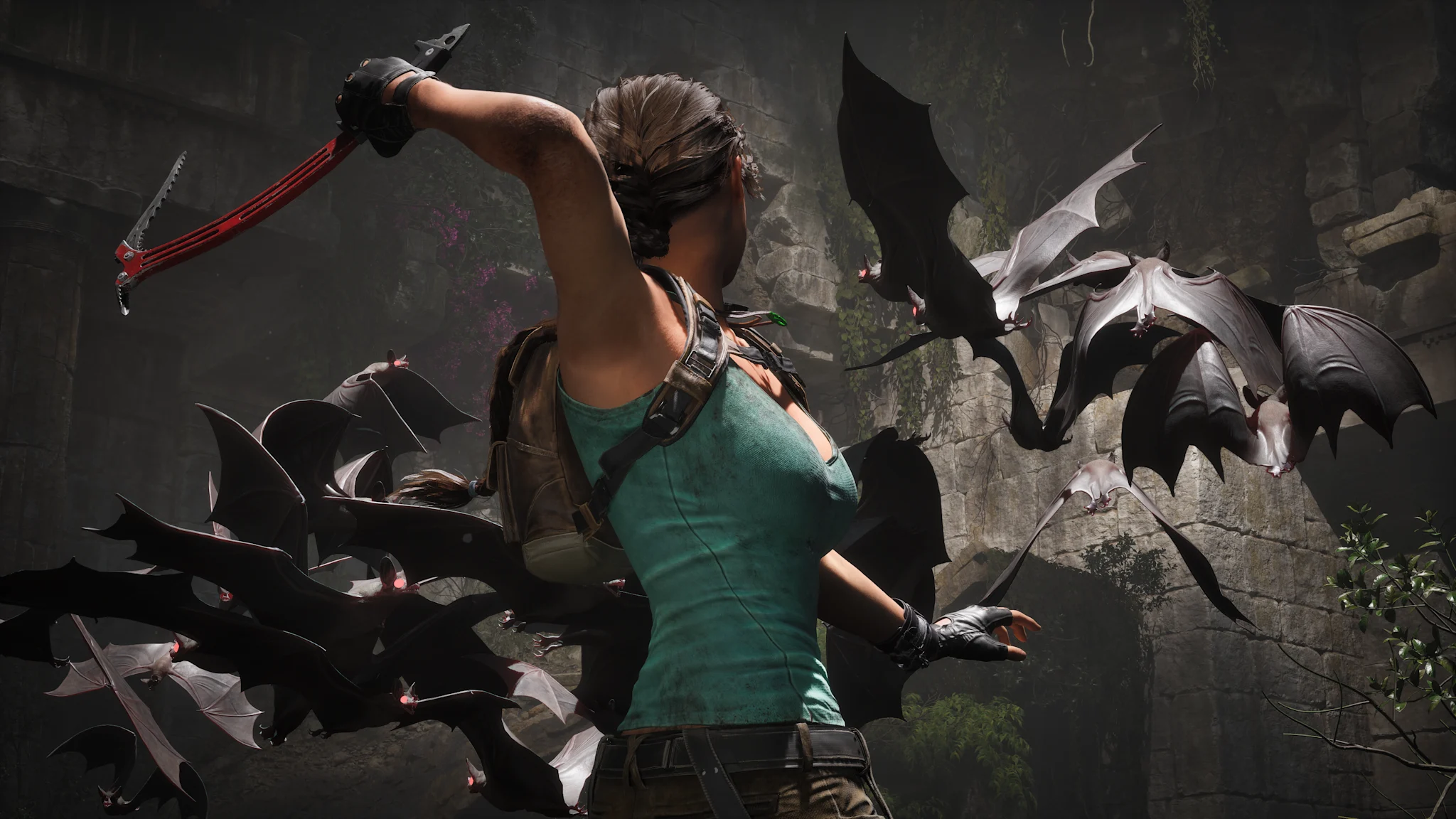
The reimagined Peru is a varied sensory experience. “There are moments where you’ll feel a chill, times where you’ll sense the humidity in the air, and others where you’ll feel the warmth of the sun on your cheeks,” Adams says. “Players move from the sounds of cracking ice and crunching snow to mud sloshing beneath Lara’s boots, alongside the songs of tropical birds and other strange noises that players will eventually learn signal very dangerous things.”
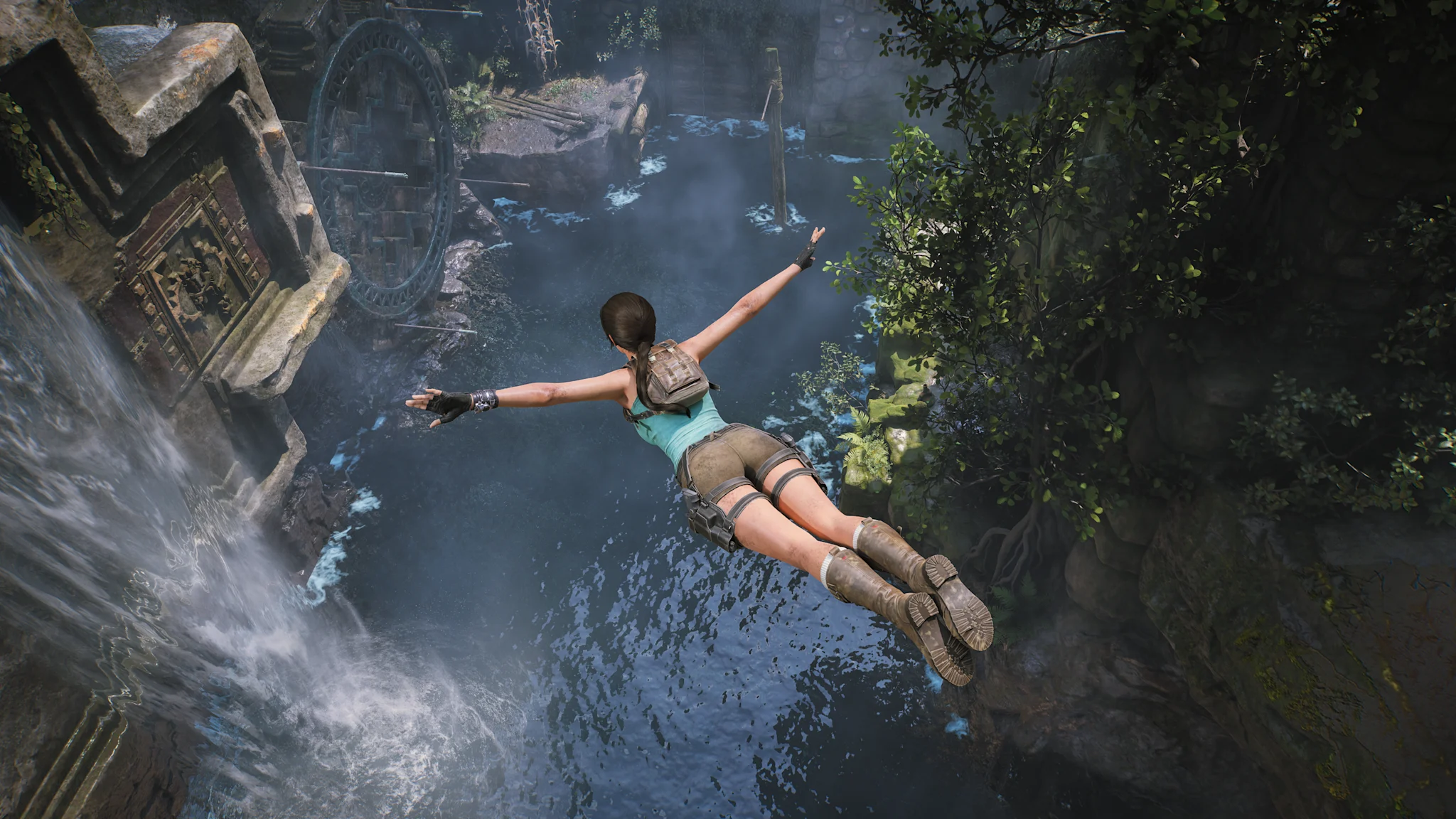
Siqueira’s first thought when he thinks of reimagined Peru? “Waterfalls. Their sound, the smell of the water, and the feeling you get when doing a trek to it on a sunny day.”
Jason Epps, Design Director at Crystal Dynamics, describes it simply: “A lush tropical jungle hidden in the mountains like a jewel. Sunny and hot, smelling of large jungle flowers.”
Through the power of Unreal Engine 5 and modern technology, the team has pushed the boundaries of what was once possible. “Things that players used to have to imagine are now front and center for them to see,” Siqueira says. “From the sound of birds in the distance to foliage reacting to the wind, there is so much detail we poured into these environments.”
The History Beneath
Peru in Legacy of Atlantis is packed with history. The Inca, the mysterious Qualopec, the Spanish conquest, and deeper secrets that connect to something far older.
“Vilcabamba was built by the Inca to escape the Spanish Conquistadors,” Epps explains. “One of the Atlanteans, Qualopec, helped the Inca through knowledge for which they revered him. While creating the city, the Inca came upon a hidden valley with dinosaurs. While active, Qualopec helped to control them.”
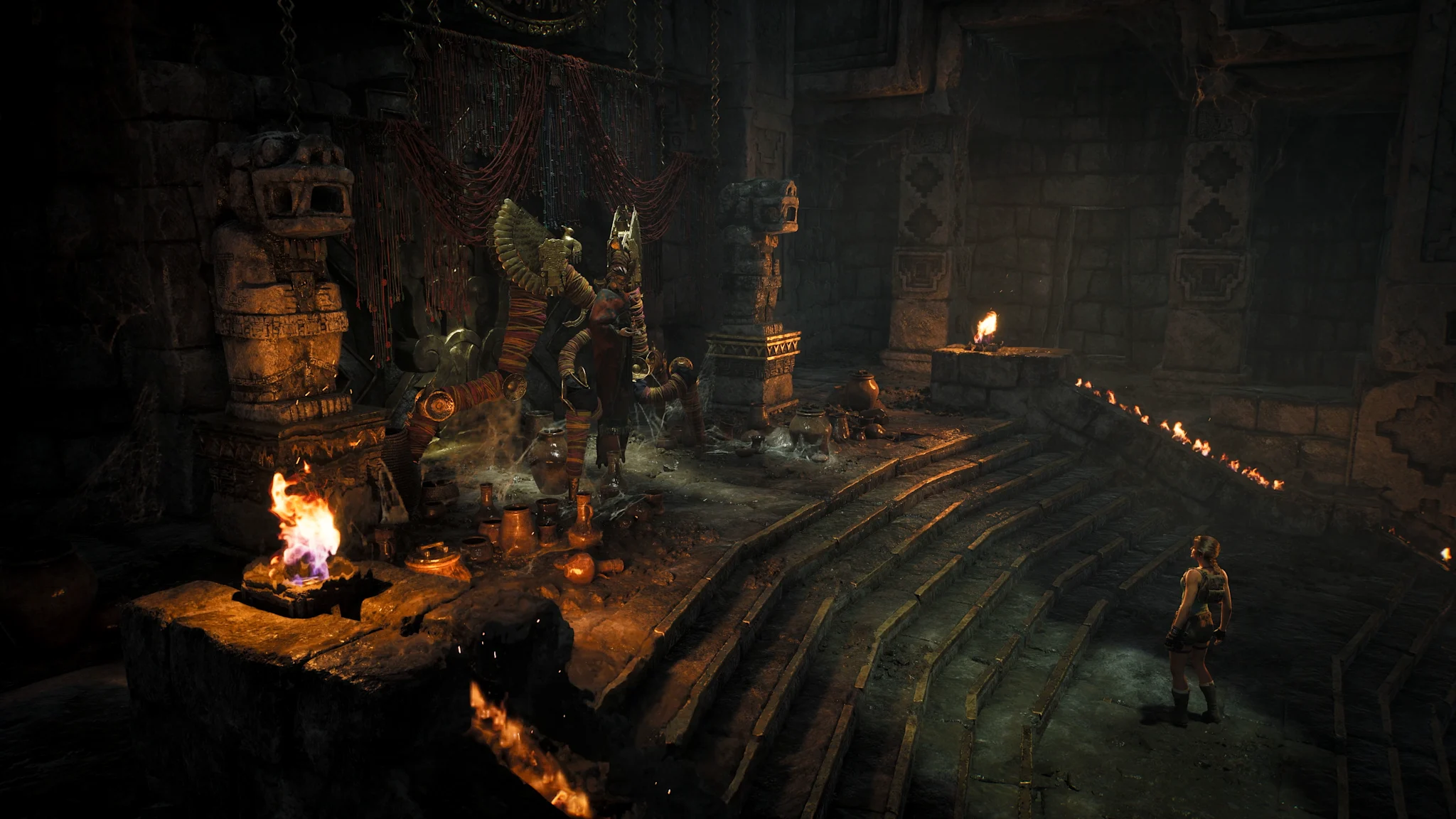
John Stafford, Narrative Director at Crystal Dynamics, frames it on a larger scale: “Qualopec and Vilcabamba were expanded from mysterious relics of Lara’s first adventure into part of a much larger Atlantean cosmology tied to creation, elements, and the Scion. Peru becomes the beginning of a global pattern.”
The culture of the Inca now suffuses everything. “We have reworked a puzzle to feature the Incan language of Khipus, knot-tying,” Epps says. “Murals, carvings, and architecture are all more reflective of the Inca and their culture, including their amazing stone buildings. Players can scan objects and will find documents with stories that celebrate and illuminate the history of the Inca.”
Pacing the Journey
The Lost Valley is the destination, but getting there is half the experience. “While the tension builds toward the Lost Valley, we’ve added an ice slide, reworked the puzzles, and improved the traversal through both the Mountain Caves and the City of Vilcabamba to ensure there are thrills early on,” Epps says.
Siqueira describes the balancing act: “The nature of reimagining a game from 1996 is finding a good balance between the original game and the new modern take. Games back then were more slow, cerebral experiences. We wanted to make sure we were taking our time to find a balance that honors that original intent and at the same time made it feel like a game that players would expect today.”
And for returning players, there are rewards hidden everywhere. “All the original secrets in Peru are present,” Epps says, “and we added a lot more.”
Why World-Building Matters
“Exploration is only meaningful if the world feels ancient, layered, and alive,” Stafford says. “Peru loses its magic if it becomes just a backdrop for combat and puzzles. The lore is what makes discovery feel personal, dangerous, and unforgettable.”
Epps sums it up: “Legacy of Atlantis is a treasure box for players. Returning players will delight in all their favorites reinvigorated and reimagined. New players will have an on-ramp into the franchise that will pull them in.”
Pre-order Tomb Raider: Legacy of Atlantis
Lara Croft’s greatest adventure begins February 12, 2027. Pre-orders are live now. Secure your edition before launch, and join us across the months ahead for new mini-documentaries, deep dives, and exclusive looks at the world of Tomb Raider: Legacy of Atlantis.
 Newer
Newer